WEE BLETHER
Glasgow slang: a wee guide to the patter
A practical guide to familiar Glasgow patter, with meanings, context and original examples you can safely read to the family group chat.
Glasgow patter brings together the words, jokes and ways of speaking that carry a conversation. A guide to Glasgow slang can help with the meanings, while context supplies the rest. Some familiar expressions are Scots words used well beyond Glasgow. Others depend heavily on the speaker, the family and the situation. A definition gets you started. Tone of voice tells you whether you have been complimented or gently taken to task.
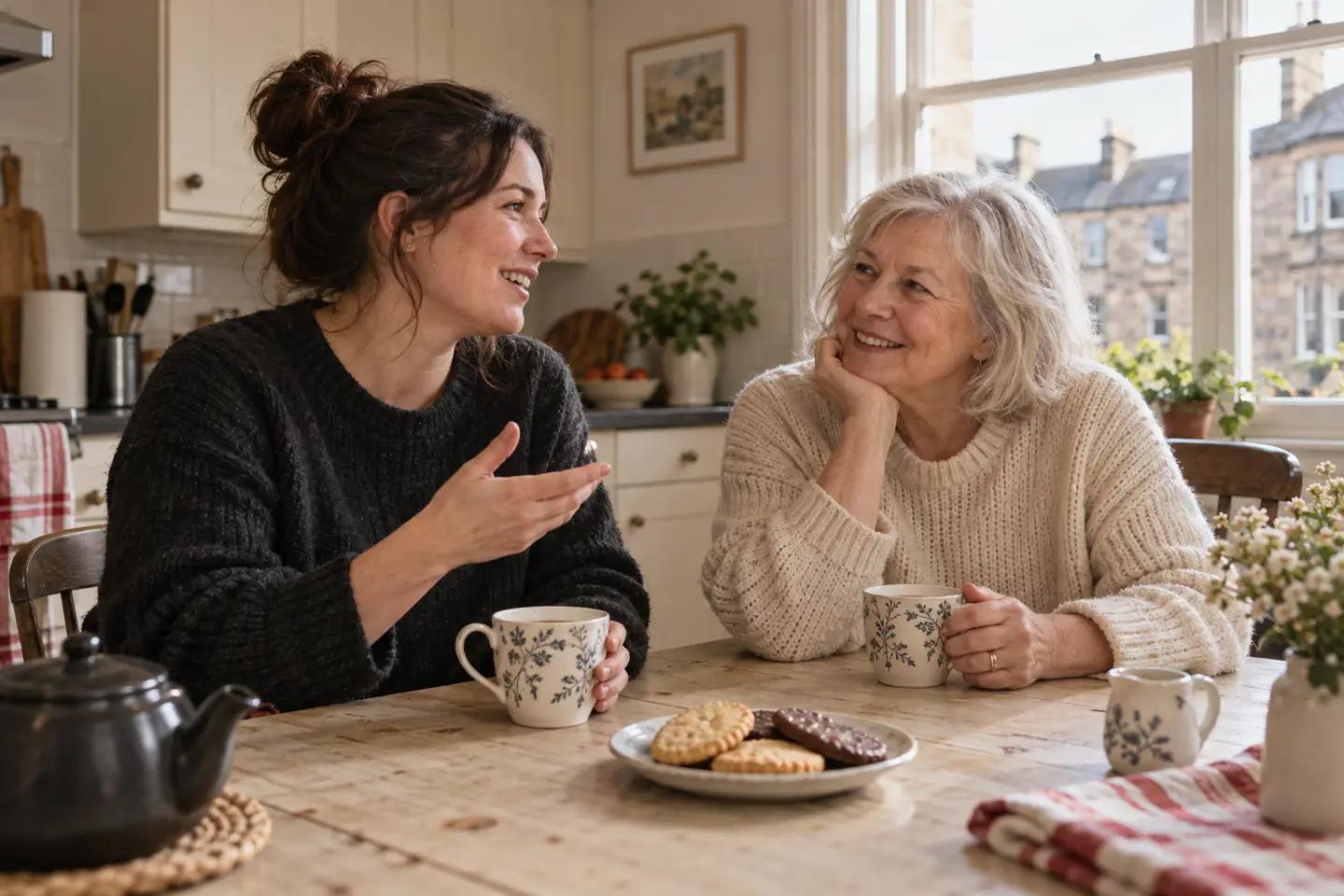
Patter is more than a list of words
You do not need to put on an accent to enjoy Glasgow speech. Listen to how people use an expression, ask when a meaning is unclear, and keep your own voice. A sentence can be funny because of its timing rather than the number of Scots words squeezed into it.
Scots is a language with a substantial written record, not simply English with creative spelling. Glasgow speech also includes Scottish English and local slang. The labels overlap in everyday conversation, so this guide uses “Glasgow slang” as a useful entrance rather than a claim that every word belongs exclusively to the city.
For a quick definition, use the alphabetical Wee Belter Wordbook. Here, we look at how a few words work in a conversation. The examples are our own.
Wean: the smallest person with the largest agenda
A wean is a child. The Dictionaries of the Scots Language entry records west-central use as well as wider examples. You may hear bairn in other families and places, including places where wean is also familiar. The map has never successfully told every household what to say.
“The wean has packed for the trip. Four biscuits and a stone.”
That example uses wean as an ordinary family word. It does not tell you anything reliable about the child's exact age, accent or postcode. Our wean and bairn guide explains the overlap in more detail.
Gallus: confidence with the volume turned up
Gallus can suggest boldness, mischievous confidence or impudence. The DSL discussion of gallus explains why the context matters. A grandparent admiring a child's nerve may mean something warmer than a person complaining about someone's behaviour.
“Arrived in sunglasses. Indoors. At breakfast. Gallus.”
Treat the word as a clue to attitude rather than a fixed compliment. Knowing the speaker helps. So does checking whether the speaker is smiling.
Blether: a conversation with flexible finishing times
Blether can refer to a chat, talk that is nonsense, or a person who talks a lot. Those related senses are recorded in the Scots dictionary. “Come in for a blether” is a friendly invitation. Calling an unfamiliar person a blether is a different sort of opening.
“Popped in for a quick blether. The tea has been replaced twice.”
If someone is havering, they may be talking foolishly or at length without much sense. VisitScotland's Scots words guide is another accessible introduction to that vocabulary. Affectionate teasing works best when the affection is already understood.
Wee: a small word doing plenty of work
Wee means small, but in familiar phrases it can also soften a request or make something sound manageable. A wee walk might still require sensible shoes. A wee favour deserves a follow-up question before you agree to carry a sofa.
Our brand name uses the affectionate phrase wee belter. The meaning guide explains that usage. It is praise you can understand without needing a Glasgow address, and it belongs to a wider range of speakers than any one city.
How to enjoy the patter without making a performance of it
- Read the situation before borrowing a teasing expression.
- Ask about an unfamiliar word rather than guessing from a dramatic spelling.
- Expect families and generations to use different words.
- Let humour come from the observation, not an exaggerated accent.
- Remember that nobody speaks entirely in dictionary examples.
The Wordbook includes meanings, register notes and original examples for a wider selection. If your family uses a word differently, tell Wee Belter the word and the context. Language is more interesting when the examples stay connected to the people who use it.
For a bit of familiar patter on a small garment, browse Scottish Favourites. For the next conversation, your own voice will do nicely.
Sources
- DSL weanDictionaries of the Scots Language
- DSL gallusDictionaries of the Scots Language
- Source for BletherScottish Language Dictionaries
- VisitScotland Scots wordsVisitScotland
- Wee: Scots dictionary entryScottish Language Dictionaries